
Self-help writer, help thyself! On being able to say “I want to publish my book”
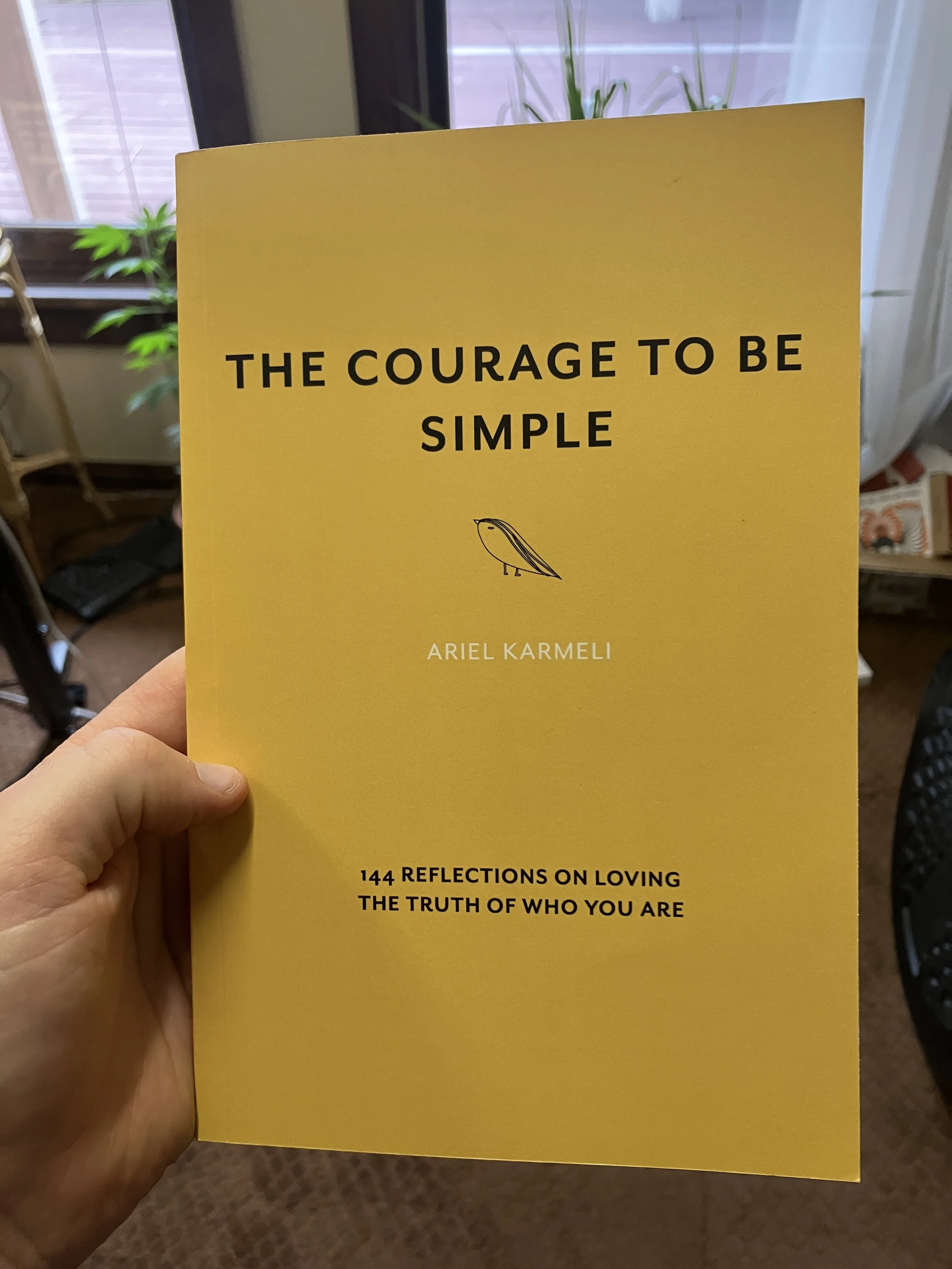
Last year I was editing a book, The Courage to Be Simple by therapist Ariel Karmeli, when the words on the page startled me into a different kind of attention.
I’m sure every editor knows this moment, when the “let me look for things to fix” part of your brain gets stopped in its tracks, and the “this speaks to me” part steps forward, curious.
In a section called “Stop Waiting to Be Chosen,” Karmeli writes:
“Waiting can feel strangely safe. You sit quietly on the edges of life, hoping to be chosen, noticed, included—without having to risk asking for what you really want. . . . Instead of declaring, ‘I want,’ you hope that someone will notice your potential, your needs, your longing—without you having to name it.
Beneath this pattern, there is often a deep fear of rejection, shame for needing in the first place, or early memories of being overlooked or punished for asking too much. Maybe you learned that being good meant being quiet. Maybe you were praised for being responsible and self-sufficient—or dismissed as naïve when you dared to express desires.
So, you learned to wait. To observe. To anticipate. You became an expert at reading the room, adjusting, softening, hinting—without fully stepping into visibility.
Practice: To move out of this passive position, you must take the subtle but significant step from feeling ‘I can’ to declaring ‘I want.’ The ‘can’ keeps you in the background, unnoticed and undefined, while the ‘want’ brings you into presence, placing you on the map and into belonging.”
I felt seen—maybe called out is more like it—by Karmeli’s suggestion to try shifting from “I can” to “I want.” So vulnerable!
His point also reminded me of responses I’ve received over the years when I’ve asked an aspiring spiritual or self-help author, “Why do you want to write this book?”
Quite often, the answer takes the form of explaining what they teach, capped off by a statement like, “And I’ve seen it help people, so I think it could help a lot more people.” Sometimes that’s followed by something like, “It’s not that I want to publish a book for me, it’s that I think these teachings could really help a broader audience if I could reach them.”
Notice the negation of I want in that response?
I’ll come back to book publishing in a minute, but first one of my own stories of trying to avoid naming a want or need.
About a dozen years ago, I was making the four-hour drive from Crestone to Boulder, Colorado—returning from a sesshin, a seven-day Zen meditation intensive. I was giving a ride to a young web marketing guy from Chicago. I’d also given him a ride to the retreat, during which I’d told him about the struggling private practice in the Feldenkrais Method of somatic education I was then running.
Perhaps feeling emboldened by having completed the arduous retreat together, he said, “You know, Matt, I could try to help you market your practice if you want. I could see it working. But your whole I can help people approach just isn’t going to work. People don’t want altruism.”
That guy’s cynicism, surely hard-won on the rough turf of internet marketing, still makes me smile. (He also gave me the gem, “It’s all smoke and mirrors until somebody cuts a check.”)
Let’s combine his insight with Karmeli’s. What was missing for me then was being able to say not only:
I think I can help people with this method
but also:
I want to help people, and to do that sustainably I need to make money through my Feldenkrais practice.
So, how does this pertain to aspiring authors?
If you feel drawn to publish a spirituality or self-help book, try saying the following, ideally out loud:
I want to publish my book.
For some people this is no problem. For others it might feel embarrassing or even a little nauseating.
I want to publish my book. I want to find readers for my writing.
Saying “I want” doesn’t reduce you to just your wanting; that’s just one part of you.
But—and here comes the publishing industry wisdom—without recognizing that desire, it’s going to be hard to run the marathon of book publishing and promotion. And that’s true whether you land a traditional publishing contract or go the hybrid or self-publishing route.
Invoking my old friend the marketer, there are a zillion readers out there who could benefit from what you have to offer and would happily pay $20 or $25 for your book—and join your newsletter, listen to your podcast, or sign up for your courses or one-on-ones.
But they’re not going to do it on the basis of your desire to help them: for better or worse, in our culture people don’t value books that way.
They’re going to do it because you want to help so much that you’re willing to sell it.
***
Every week, I talk with aspiring nonfiction authors about their wishes for a book—whether it’s just an idea or is partly or fully drafted. If you’d like to talk about your book, I’d love to hear from you.